 Гранд Лоджистік Компані
 02.09.2026
 9 min
International freight transportation plays an important role for companies that import goods, export their own products, or cooperate with foreign suppliers and business partners.
Transporting cargo between Ukraine and European countries has its own specific requirements. In addition to choosing the right vehicle and route, it is necessary to consider customs procedures, accompanying documents, requirements for specific types of goods, and international road freight regulations.
Proper preparation helps avoid delays along the route, unexpected costs, and documentation issues.
In this article, we will look at how international freight transportation between Ukraine and Europe is organized, what documents may be required, how to prepare cargo, and what should be considered before shipment.
What Is International Freight Transportation?
International freight transportation is the delivery of goods between two or more countries involving the crossing of a national border.
For Ukrainian businesses, one of the most common directions is road freight transportation between Ukraine and European Union countries.
This type of transportation can be used for:
- importing goods into Ukraine;
- exporting Ukrainian products;
- delivering raw materials and components;
- transporting equipment;
- moving goods between warehouses;
- supplying products to international customers.
Unlike domestic transportation, international freight delivery requires compliance with the regulations of several countries and the completion of the relevant customs procedures.
How International Freight Transportation Works: From Request to Delivery
International delivery consists of several consecutive stages. To avoid unexpected issues, each stage should be planned in advance.
1. Calculation and Planning
The first step is to determine the route, cargo characteristics, required vehicle type, and desired delivery time.
To calculate the transportation, information about the cargo weight, volume, number of packages, dimensions, and any special requirements is usually required.
2. Document Preparation
Before transportation begins, the documents for the goods are checked and the customs and accompanying documents required for the specific route are determined.
3. Loading
The cargo is properly packaged, loaded into the vehicle, positioned, and secured according to its characteristics.
4. Customs Clearance and Border Crossing
During international transportation, the cargo goes through the necessary customs procedures. Once the relevant formalities have been completed, the vehicle continues along the planned route.
5. Delivery to the Final Recipient
After crossing the border and completing the required procedures, the cargo continues to its final destination.
The exact process may differ depending on the country of origin, destination country, type of cargo, and delivery terms.
Main Freight Transportation Routes Between Ukraine and Europe
International road freight transportation can be organized between Ukraine and most European countries.
Popular destinations include:
- Poland;
- Germany;
- Czech Republic;
- Slovakia;
- Hungary;
- Romania;
- Austria;
- the Netherlands;
- Belgium;
- Italy;
- France.
Delivery does not necessarily involve a direct route between two countries. Depending on the pickup and delivery locations, a truck may travel through several countries.
Therefore, when planning international freight delivery, it is important to consider not only the starting and final points but also the requirements of transit countries, road conditions, border crossing points, and route-specific regulations.
What Documents Are Required for International Freight Transportation?
The required documents depend on the type of cargo, destination country, delivery terms, and specific logistics operation.
CMR Consignment Note
The CMR is an international consignment note used for international road freight transportation.
It contains key information about the sender, carrier, recipient, cargo, and route.
A properly completed CMR is an important part of the documentation accompanying an international shipment.
Documents for the Goods
Depending on the type of product, the following documents may be required:
- commercial invoice;
- packing list;
- documents confirming the origin of the goods;
- specifications;
- certificates or declarations;
- other documents required for a particular category of goods.
Customs Documents
Customs formalities must be completed when cargo crosses an international border.
For import and export operations, the relevant customs declarations and other documents required for cargo clearance may be used.
The exact list depends on the nature of the goods, their origin, the customs procedure, and the destination country.
What Is Export Transportation?
Export transportation means delivering goods from Ukraine to another country.
Before shipment, the goods must be prepared for export, the necessary documents must be completed, and customs formalities must be arranged.
Particular attention should be paid to the accuracy of information about the goods, including their description, quantity, value, country of origin, and other relevant characteristics.
Errors in documentation may result in additional inspections and delivery delays.
What Is Import Transportation?
Import transportation involves delivering goods from another country into Ukraine.
In this case, the cargo must undergo the procedures required for importing goods into Ukraine.
Before shipment, it is important to check:
- documents for the goods;
- delivery terms;
- customs procedure;
- certification requirements;
- customs duties and taxes;
- requirements for the specific product category.
Import procedures may differ depending on the type of goods, so document preparation should ideally begin before the truck is loaded.
How to Choose a Vehicle for International Freight Transportation
The type of vehicle must correspond to the characteristics of the cargo and the route.
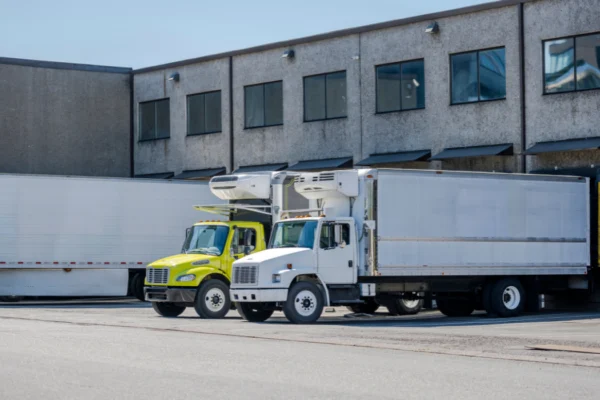
Tautliner semi-trailers are commonly used for standard goods. Refrigerated trucks are used when temperature control is required.
For smaller shipments, consolidated transportation may be a suitable option, with cargo from several shippers transported in the same vehicle.
When choosing a vehicle, it is important to consider:
- weight;
- volume;
- dimensions;
- number of pallets;
- type of packaging;
- special cargo characteristics;
- temperature requirements;
- loading method;
- route.
An incorrectly selected vehicle can cause not only difficulties during loading but also additional costs.
Consolidated Cargo in International Logistics
Consolidated transportation can be a convenient solution for companies that need to deliver a relatively small shipment.
Instead of paying for an entire truck, the customer pays for the portion of transport capacity required for their cargo.
This format can be suitable for:
- small shipments;
- components;
- product samples;
- commercial goods;
- small-sized equipment;
- regular small-volume deliveries.
However, consolidated cargo may follow a different logistics process from direct FTL transportation and can involve additional consolidation and sorting operations.
Therefore, when choosing the transportation format, it is important to consider not only the price but also the required delivery time.
How to Prepare Cargo for International Delivery
Proper cargo preparation helps reduce the risk of damage and transportation issues.
Check the Packaging
Packaging should correspond to the type of goods and withstand transportation over long distances.
Particular attention should be paid to protecting:
- fragile items;
- equipment;
- glass products;
- moisture-sensitive goods;
- products that may be damaged by movement.
Determine Accurate Dimensions
For international freight transportation, it is important to know not only the total weight but also the dimensions of individual cargo units.
This information helps select the appropriate vehicle and arrange the cargo correctly inside the trailer.
Secure the Cargo
Cargo should not be allowed to move freely inside the vehicle during transportation.
Pallets, boxes, and other cargo units must be positioned and secured so that they remain stable throughout the entire route.
What to Consider When Crossing the Border
Border crossing is one of the stages that can affect the overall delivery time.
The duration of border procedures may depend on:
- congestion at the border crossing point;
- accuracy of the documents;
- the need for additional inspections;
- cargo characteristics;
- customs procedures;
- the current situation on a particular route.
For this reason, international transportation should be planned with an appropriate time buffer rather than relying on an extremely tight delivery deadline.
How the Cost of International Freight Transportation Is Calculated
The cost of international delivery depends on several factors.
The main ones include:
- Route and distance. The longer the route, the higher the costs associated with completing the trip.
- Weight and volume. These determine the required transportation capacity.
- Vehicle type. Specialized vehicles may have higher transportation costs.
- Transportation format. FTL and consolidated LTL transportation have different pricing principles.
- Cargo characteristics. Special transportation requirements can affect the organization and cost of delivery.
- Number of loading and unloading points.
- Additional services. Customs support, insurance, warehousing, and other services may be charged separately.
- Urgency. Non-standard or urgent deliveries may require additional resources.
Therefore, an accurate international freight quote can only be calculated after receiving complete information about the cargo and route.
How to Reduce Risks During International Freight Transportation
It is impossible to eliminate every potential risk, but proper preparation can significantly reduce them.
Check Documents in Advance
It is better to identify documentation errors before loading rather than during border procedures.
Describe the Cargo Correctly
The information provided in the documents should correspond to the actual cargo.
Provide Accurate Characteristics
Weight, number of packages, dimensions, and other parameters should be stated correctly.
Consider the Requirements of the Destination Country
Certain categories of goods may be subject to additional requirements concerning documentation, certification, or import procedures.
Allow Enough Time
International routes can be affected by border conditions and other factors that cannot always be predicted in advance.
Specifics of Freight Transportation Between Ukraine and the EU
Freight transportation between Ukraine and the European Union is subject to specific legal regulations.
The agreement governing road freight transportation between Ukraine and the EU has been extended and updated, with its current provisions establishing specific conditions for international transportation between the parties.
Carriers must also monitor current technical and documentation requirements. For example, from July 1, 2026, Ukraine requires newly registered freight vehicles intended for international transportation to be equipped with second-generation smart tachographs, G2v2.
This illustrates why international logistics requires attention not only to the route and transportation rate but also to current regulatory requirements.
What Information Is Needed to Organize International Freight Transportation?
To calculate the optimal delivery option, it is necessary to provide the main information about the shipment:
- Country and city of origin.
- Country and city of destination.
- Type of cargo.
- Weight.
- Volume.
- Number of pallets or cargo units.
- Dimensions.
- Date when the cargo will be ready.
- Temperature requirements.
- Loading and unloading conditions.
- Information about available documents.
Additional information may be required for certain types of cargo.
The more complete the information provided at the initial stage, the more accurately the required vehicle, route, delivery time, and transportation cost can be determined.
Conclusion
International freight transportation is a more complex logistics process than delivering cargo within a single country. It requires consideration of the route, vehicle, documentation, customs procedures, cargo requirements, and possible border-crossing conditions.
Proper preparation starts with accurately determining the characteristics of the cargo and selecting the right transportation format. FTL may be suitable for larger shipments, while consolidated LTL transportation can be a practical option for smaller volumes. Goods with special requirements may require a specific type of vehicle.
The earlier all relevant details are taken into account, the fewer risks are likely to arise during transportation.
And if you want to be sure that your international delivery is handled smoothly from document preparation to the arrival of your cargo, Grand Logistics Company can organize the transportation and take care of all your logistics needs.
3.