 Гранд Лоджистік Компані
 02.09.2026
 8 min
The cost of freight transportation is one of the first questions that arises when planning a shipment. For businesses, this is especially important because transportation expenses affect product costs, procurement budgets, and overall logistics efficiency.
At the same time, there is no universal price for cargo transportation. Two shipments between the same cities can have different costs due to differences in cargo weight and volume, vehicle type, route, delivery time, or additional services.
In this article, we will look at what determines freight transportation costs, how delivery prices are calculated, and what information is needed to get an accurate quote.
How Is the Cost of Freight Transportation Calculated?
The transportation price depends on the costs required to organize and complete a specific shipment.
The main factors usually include distance, route, vehicle type, and cargo characteristics. Additional costs may also depend on loading and unloading, customs procedures, the number of delivery points, temperature requirements, insurance, and other logistics services.
Therefore, freight transportation cost is not simply the number of kilometers multiplied by a rate. The final price is calculated based on all the conditions of a particular delivery.
What Determines the Cost of Freight Transportation?
Distance and Route
The length of the route is one of the main factors used when calculating the delivery price.
However, the number of kilometers is not the only consideration. Other factors may include:
- route characteristics;
- number of loading and unloading points;
- domestic or international transportation;
- border crossings;
- transit through other countries.
That is why the same distance does not always mean the same delivery cost.
Cargo Weight and Volume
Weight determines the required payload capacity of the vehicle, while volume determines how much cargo space is needed.
A shipment can be relatively light but still occupy a large part of the truck. For an accurate calculation, it is therefore important to provide not only the total weight but also the volume, number of pallets, or number of cargo units.
Cargo Dimensions
The length, width, and height of the cargo can also affect the transportation cost.
Standard boxes and pallets usually do not require special solutions. Oversized or non-standard cargo may require a different type of vehicle, special loading procedures, or additional route planning.
Cargo Characteristics
Special properties of the goods can also influence the final price.
These may include:
- fragility;
- temperature requirements;
- sensitivity to moisture;
- special packaging requirements;
- specific loading conditions;
- additional cargo securing;
- special transportation conditions.
The more complex the transportation requirements, the more factors need to be considered when calculating the cost.
How Does Vehicle Type Affect the Price?
The vehicle is selected according to the characteristics of the cargo. This affects both whether the shipment can be transported and how much it will cost.
Tautliner Truck
A tautliner is a versatile option for most standard types of cargo.
It is commonly used for transporting pallets, boxes, equipment, construction materials, and other goods that do not require special temperature conditions.
Refrigerated Truck
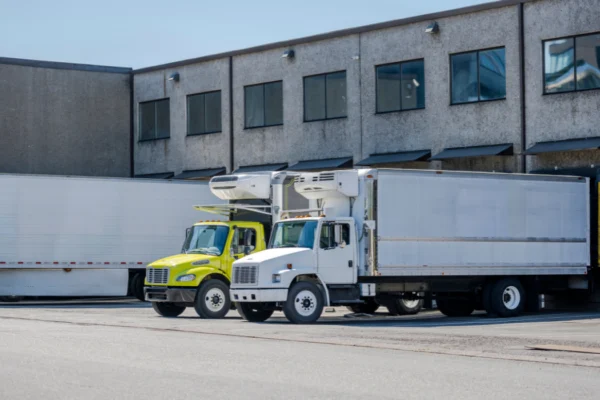
Refrigerated vehicles are used for cargo that must be transported within a specific temperature range.
Because of the refrigeration equipment and different operating requirements, transportation by refrigerated truck may cost more than standard freight transportation.
Insulated Truck
An insulated cargo body provides thermal insulation and helps maintain stable conditions inside the cargo compartment.
The choice between an insulated truck and a refrigerated vehicle depends on the specific requirements of the goods.
Specialized Transportation
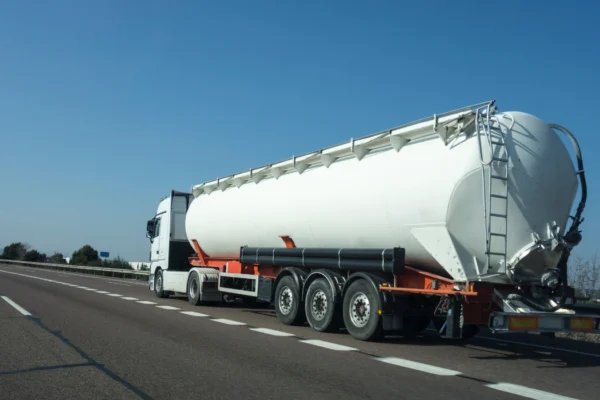
Oversized, heavy, or non-standard cargo may require specialized transportation.
In such cases, the final price depends not only on the characteristics of the vehicle but also on the specific requirements of the entire transportation process.
Why the Price per Kilometer Does Not Always Show the Real Delivery Cost
A rate per kilometer can be useful as a general reference, but it does not always represent the full cost of a shipment.
Two deliveries over the same distance may have different prices because of:
- vehicle type;
- cargo weight and volume;
- number of delivery points;
- special transportation requirements;
- additional services;
- international routes.
When comparing transportation offers, it is therefore better to look at the total delivery cost, rather than focusing only on the price per kilometer.
FTL and LTL: How Does the Transportation Format Affect the Price?
FTL — Full Truckload Transportation
FTL (Full Truckload) means that one vehicle is used for a single shipper’s cargo.
This format can be suitable for large shipments, direct deliveries, or cargo where minimizing the number of transfers is important.
LTL — Less Than Truckload Transportation
LTL (Less Than Truckload) is used when the shipment does not require the entire vehicle.
In this case, cargo from different shippers can be transported in the same vehicle. For smaller shipments, this can be a more cost-effective option.
However, consolidated transportation may involve additional consolidation and sorting operations, so it is important to consider not only the price but also the delivery time.
Domestic vs. International Freight Transportation
The cost of domestic transportation and international delivery is calculated differently.
For international shipments, additional factors may include:
- customs procedures;
- documentation;
- border crossings;
- transit through other countries;
- additional logistics operations.
For this reason, international cargo transportation should not be evaluated based solely on the number of kilometers.
Seasonality and Urgent Deliveries
Demand for transportation can change depending on the season and the workload of specific routes.
Urgent transportation may also cost more than a planned shipment because it can require finding an available vehicle quickly, changing a schedule, or allocating additional resources.
Planning the shipment in advance generally provides more opportunities to choose an efficient transportation solution.
Return Loads
On certain routes, the availability of a return load may also affect the transportation rate.
When a vehicle can take another shipment after completing the initial delivery, its overall utilization becomes more efficient. The actual impact of a return load depends on the route, schedule, and availability of a suitable shipment.
Additional Services
In addition to the transportation itself, the logistics process may include:
- loading;
- unloading;
- packaging;
- palletizing;
- warehousing;
- customs support;
- insurance;
- additional delivery points;
- specialized equipment.
Not every shipment requires these services, so they are included depending on the specific transportation requirements.
Why Short-Distance Shipments Are Not Always Cheaper
A shorter route does not necessarily mean a proportionally lower transportation cost.
The total price may include fixed expenses such as vehicle dispatch, loading organization, waiting time, loading and unloading operations. As a result, the price per kilometer for a short shipment can sometimes be higher than for a longer route.
That is why the most accurate approach is to evaluate the total cost of completing the shipment rather than focusing only on the kilometer rate.
What Information Is Needed for an Accurate Freight Quote?
To get an accurate cargo delivery price, it is important to provide the main details about the shipment:
- Route — where the cargo needs to be picked up and delivered.
- Cargo type — what exactly is being transported.
- Weight — total cargo weight.
- Volume — total cubic volume.
- Number of packages or pallets.
- Dimensions — especially for non-standard cargo.
- Loading date.
- Required delivery time.
- Special requirements — temperature control, special packaging, etc.
- Loading and unloading conditions.
For international transportation, the country of origin, destination country, and information about the goods’ documentation are also required.
How to Reduce Freight Transportation Costs
Reducing costs does not always mean choosing the cheapest rate. In many cases, it is more effective to optimize the transportation process itself.
Choose the Right Vehicle
There is no reason to pay for a vehicle with significantly more capacity than the shipment requires.
Use LTL for Smaller Shipments
When cargo occupies only a small part of the vehicle, consolidated transportation may be more economical than booking the entire truck.
Plan the Delivery in Advance
Booking transportation ahead of time provides more options for choosing the route and transportation format.
Optimize Packaging
Compact and well-planned packaging helps use the available cargo space more efficiently and avoid unnecessary transportation costs.
Provide Accurate Cargo Information
Incorrect information about weight, volume, or dimensions can result in the need to change the vehicle and may lead to additional expenses.
Can You Know the Exact Delivery Price in Advance?
An initial estimate can be calculated based on the main cargo and route parameters.
However, the final price depends on all the conditions of a specific shipment. If the route, weight, volume, vehicle type, or list of additional services changes, the total transportation cost may also change.
That is why it is important to provide all available information when requesting a quote.
How to Compare Freight Transportation Offers
When choosing a carrier, price should not be the only factor.
It is important to check:
- what is included in the quoted price;
- which type of vehicle will be used;
- whether loading and unloading are included;
- whether customs support is included;
- the estimated delivery time;
- whether additional charges may apply.
A lower initial price can sometimes turn out to be more expensive overall if certain costs were not included in the original quote.
Conclusion
Freight transportation costs depend on a combination of factors, including distance and route, cargo weight and volume, vehicle type, transportation format, cargo characteristics, urgency, and additional services.
LTL transportation can be suitable for smaller shipments, while FTL is often more appropriate for larger volumes. Cargo with special requirements may require specialized vehicles.
To receive an accurate freight transportation quote, it is important to determine the main cargo parameters, route, and transportation requirements before delivery begins. This makes it easier to select the right vehicle, avoid unexpected costs, and make the logistics process more predictable.
And if you do not want to spend time on complex calculations and searching for the right solution, Grand Logistics Company can help you choose the optimal transportation format, calculate the delivery cost, and organize the entire logistics process.
4.