 Гранд Лоджистік Компані
 02.09.2026
 8 min
Choosing the right truck is one of the most important stages of organizing freight delivery. The right vehicle affects not only whether the cargo can be transported safely, but also the cost of transportation, loading convenience, and delivery time.
Standard goods can often be transported using a tautliner truck, while cargo with temperature requirements may require a refrigerated or insulated vehicle. Oversized or heavy cargo, in turn, may require a flatbed or specialized truck.
That is why choosing a vehicle based only on the weight of the cargo is not enough. Its volume, dimensions, characteristics, loading requirements, and route must also be considered.
In this article, we will look at the main types of freight vehicles, what types of cargo they are suitable for, and how to choose the right truck for a specific shipment.
What Determines the Choice of a Freight Vehicle
Before booking transportation, it is important to determine the main characteristics of the cargo.
The choice of vehicle depends on:
- Weight. Determines the required payload capacity of the vehicle.
- Volume. Shows how much space is needed to accommodate the cargo.
- Dimensions. The length, width, and height of the cargo may limit the choice of vehicle body.
- Cargo characteristics. Some goods require temperature control, protection from moisture, or additional securing.
- Loading method. Certain types of cargo may require side, top, or other specialized loading methods.
- Route. Domestic and international transportation may have different requirements.
- Delivery time. Urgent shipments may require specific logistics solutions.
The more accurately these parameters are determined, the easier it is to select a vehicle that actually meets the requirements of the shipment.
Main Types of Freight Vehicles
Freight logistics uses different types of vehicles and cargo bodies. The choice depends primarily on what needs to be transported and under what conditions.
Tautliner Truck
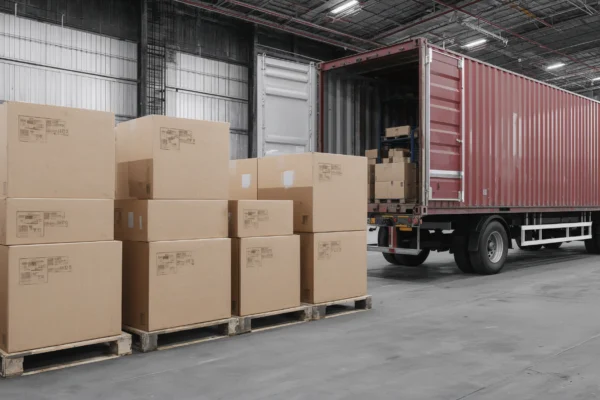
A tautliner truck is one of the most versatile options for standard freight transportation.
It is suitable for:
- palletized goods;
- boxes;
- equipment;
- construction materials;
- industrial products;
- commercial goods.
The curtain-sided body protects cargo from the external environment, while its design allows for different loading methods.
The main advantage of a tautliner is its versatility. It is suitable for a wide range of goods that do not require a special temperature regime.
Refrigerated Truck
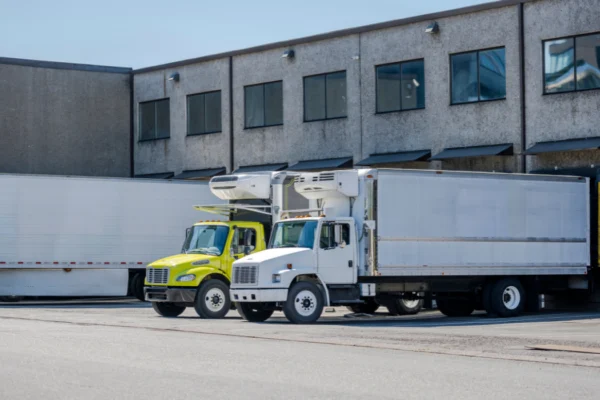
Refrigerated trucks are used for cargo that must be transported within a specific temperature range.
This may include:
- food products;
- pharmaceutical goods;
- certain cosmetic products;
- other temperature-sensitive goods.
When booking a refrigerated vehicle, it is important to determine not only that cooling is required, but also the specific permitted temperature range.
Insulated Truck
An insulated vehicle has a thermally insulated cargo body that helps reduce the impact of external temperatures on the goods.
Unlike a refrigerated truck, an insulated body is not designed for active cooling. Its main purpose is to help maintain more stable temperatures inside the cargo compartment.
Therefore, the choice between a refrigerated and an insulated vehicle depends on the specific requirements of the goods.
Flatbed Truck
A flatbed truck has an open platform, providing convenient access to the cargo during loading and unloading.
It can be used to transport:
- metal structures;
- construction materials;
- equipment;
- long-length elements;
- oversized cargo.
A flatbed is particularly useful for cargo with unusual shapes that is difficult to fit inside a standard enclosed body.
Specialized Transportation
Certain categories of cargo cannot be transported using a standard truck.
Specialized transportation may be required for:
- oversized cargo;
- heavy structures;
- goods with specific temperature requirements;
- cargo with special transportation conditions.
In such cases, the vehicle is selected based on the specific characteristics of the cargo and the route.
How to Choose a Truck Based on Cargo Weight and Volume
One of the most common mistakes is choosing a vehicle based solely on payload capacity.
Weight is an important parameter, but it is not the only one.
For example, two shipments may weigh the same, while one takes up significantly more space due to larger dimensions or lower density.
That is why, before booking a vehicle, it is important to determine:
- total weight;
- total volume;
- number of pallets;
- number of cargo units;
- weight of individual units;
- dimensions of the largest items.
This information helps not only to select the appropriate vehicle but also to determine the most suitable transportation format.
Why Cargo Dimensions Matter
The size of the cargo can significantly affect the choice of vehicle even when its weight is relatively low.
This is especially important for:
- long-length structures;
- tall elements;
- wide components;
- oversized equipment;
- non-standard products.
If the cargo cannot fit into a standard body, a flatbed or specialized vehicle may be required, and the route may need to be planned with the cargo dimensions in mind.
Which Vehicle Is Suitable for Different Types of Cargo?
For quick reference, the choice can generally be summarized as follows:
- Standard goods, boxes, and pallets — tautliner truck.
- Cargo with strict temperature requirements — refrigerated truck.
- Goods where thermal insulation is important — insulated vehicle.
- Long-length and oversized cargo — flatbed or specialized vehicle.
- Small shipments — appropriately sized vehicle or LTL transportation.
This is only a general guideline. The final choice depends on the specific cargo, its characteristics, and the route.
How to Choose a Vehicle for International Freight Transportation
For international freight transportation, weight and volume are not the only factors to consider.
You should also take into account:
- route length;
- countries through which the shipment will travel;
- vehicle requirements;
- customs procedures;
- temperature requirements;
- transportation format — FTL or LTL.
Tautliner semi-trailers are often used for standard international cargo. Goods with temperature requirements are transported in refrigerated vehicles or other appropriate specialized transportation.
Smaller shipments can be transported as part of consolidated cargo.
How Vehicle Choice Affects Transportation Costs
The type of vehicle is directly related to the cost of delivery.
A specialized vehicle may have higher operating costs, but it can be essential for a particular type of cargo.
At the same time, booking a vehicle with significantly more capacity than necessary is not always cost-effective. If the cargo occupies only a small part of the available space, paying for unused transportation capacity simply increases costs.
The best approach is therefore to choose a vehicle based on the actual characteristics of the cargo, rather than simply selecting the largest or cheapest option.
How to Choose Between FTL and LTL
The vehicle type is not the only decision to make. It is also important to determine the transportation format.
FTL — Full Truckload
FTL (Full Truckload) means that the vehicle is used for a single shipper’s cargo.
This format may be suitable when:
- the cargo occupies a significant part of the vehicle;
- direct delivery is required;
- it is important to minimize the number of transfers;
- a specific delivery time must be met.
LTL — Less Than Truckload
LTL (Less Than Truckload) is used for shipments that do not require an entire vehicle.
In this case, cargo from several shippers is transported in the same vehicle.
For smaller shipments, this can be a more cost-effective option, although the delivery time and route may differ from direct FTL transportation.
How to Choose a Truck: A Step-by-Step Guide
To avoid choosing the wrong vehicle, it is useful to follow a clear sequence.
Step 1. Determine the Type of Cargo
What exactly needs to be transported? Is the cargo fragile, temperature-sensitive, or in need of special protection?
Step 2. Measure the Weight and Volume
Record the total weight, number of pallets or cargo units, and total volume.
Step 3. Determine the Dimensions
It is especially important to measure oversized or non-standard cargo units.
Step 4. Determine the Loading Method
Consider how the cargo will be loaded and unloaded and whether there are any restrictions at the pickup or delivery location.
Step 5. Consider the Route
For international transportation, take into account the countries along the route, border crossings, and vehicle requirements.
Step 6. Choose the Transportation Format
Depending on the shipment volume and required delivery time, determine whether FTL, LTL, or another transportation format is most appropriate.
Step 7. Compare the Options
Evaluate not only the vehicle price but also the total delivery cost, including all necessary transportation conditions.
Common Mistakes When Choosing a Freight Vehicle
Focusing Only on Weight
The cargo may be within the vehicle’s payload capacity but still not fit in the body because of its volume or dimensions.
Ignoring Temperature Requirements
Not all goods can be transported in a standard tautliner.
Incorrect Cargo Dimensions
Inaccurate measurements can result in the need to replace the vehicle or change the loading arrangement.
Booking an Oversized Vehicle
Excess capacity increases costs when it is not actually required.
Failing to Consider Loading Requirements
If the cargo requires a specific loading method, this should be taken into account before the vehicle is dispatched.
What Information Is Needed to Select the Right Vehicle?
To determine which truck is suitable for a shipment, it is useful to prepare:
- Type of cargo.
- Total weight.
- Volume.
- Number of pallets or cargo units.
- Dimensions.
- Temperature requirements.
- Type of packaging.
- Loading location.
- Delivery location.
- Required delivery time.
- Loading and unloading requirements.
For international freight transportation, the country of origin and destination country should also be provided.
The more accurate the information, the lower the risk of selecting the wrong vehicle or receiving an inaccurate cost estimate.
Conclusion
Choosing the right truck starts with analyzing the cargo itself rather than looking for a specific vehicle model.
Weight, volume, dimensions, cargo characteristics, temperature requirements, loading method, and route all determine which transportation solution is most suitable.
Standard goods can usually be transported using a tautliner truck. Temperature-sensitive products may require a refrigerated or insulated vehicle, while non-standard and oversized cargo may require a flatbed or specialized transportation solution.
It is also important to choose the right transportation format. A large shipment may require FTL, while LTL can be more suitable for smaller volumes.
And if you are not sure which vehicle and transportation format are right for your cargo, Grand Logistics Company can take all the relevant characteristics into account, select the optimal transportation solution, and organize delivery from loading to the final destination.