 Гранд Лоджистік Компані
 02.09.2026
 9 min
Not every company needs to book an entire truck to deliver its goods. When a shipment consists of only a few pallets or boxes, using a full truck may be excessive and not always cost-effective.
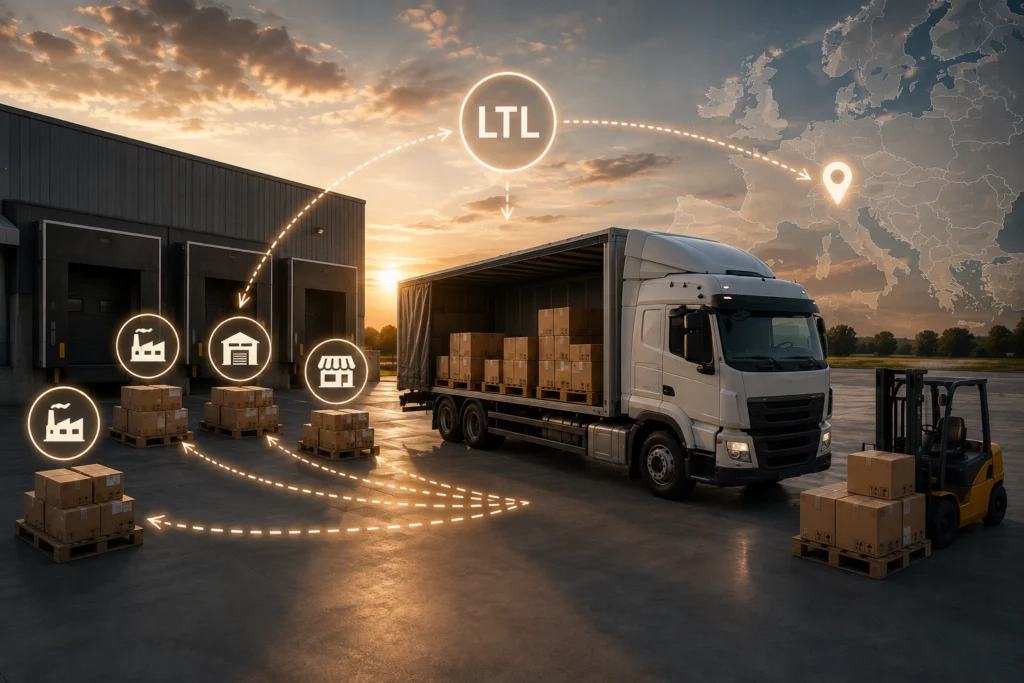
In such cases, businesses can use consolidated cargo transportation — a freight delivery format in which shipments from several customers are combined in the same vehicle. In international logistics, this format is commonly referred to as LTL transportation (Less Than Truckload).
Consolidated delivery makes it possible to transport smaller shipments without paying for an entire truck. At the same time, this type of transportation has its own specifics, including cargo consolidation, sorting, possible transfers, and other logistics operations.
In this article, we will explain what consolidated cargo is, how LTL transportation works, who it is suitable for, how the cost is calculated, and when it is better to choose a full truckload shipment.
What Is Consolidated Cargo?
Consolidated cargo is a shipment that is transported together with cargo from other shippers in the same vehicle.
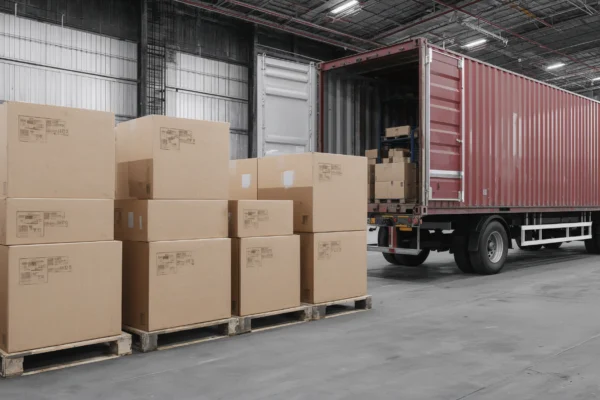
This format is used when an individual shipment does not require the entire available capacity of a truck. Instead of paying for the whole vehicle, the shipper pays for the transportation capacity required for their own cargo.
For example, a company may need to deliver several pallets of goods from Poland to Ukraine. Booking a separate truck for such a small shipment may not be practical. The cargo can instead be included in a consolidated shipment traveling in the same direction.
That is why consolidated freight transportation is particularly relevant for small and medium-sized businesses, regular small-volume shipments, and companies that do not want to wait until enough goods accumulate to fill an entire truck.
What Is LTL Transportation?
LTL (Less Than Truckload) means transporting cargo that does not require the full capacity of a truck.
The principle is simple: shipments from several shippers are transported in the same vehicle, while transportation costs are allocated according to the characteristics of each shipment.
LTL transportation can be a convenient solution for:
- small shipments;
- pallets;
- boxes;
- components;
- spare parts;
- equipment;
- regular small-volume deliveries.
The key feature of this format is that the shipment does not require a dedicated truck.
How Does Consolidated Cargo Delivery Work?
Consolidated freight transportation involves a somewhat more complex logistics process than direct transportation by a dedicated vehicle.
The process usually includes the following stages.
1. Cargo Pickup
The shipment is collected from the sender or delivered to an agreed warehouse.
2. Cargo Inspection
The weight, volume, number of packages, and dimensions are determined. If necessary, the cargo is additionally packaged or palletized.
3. Consolidation
Shipments from different senders are combined into a consolidated load.
4. Route Planning
The logistics route is planned based on pickup points, transit operations, and final delivery addresses.
5. Domestic or International Transportation
The consolidated shipment is transported to the relevant region or destination country.
6. Sorting and Final Delivery
After arrival, the individual shipments are sorted according to their final destinations and delivered to the recipients.
For international transportation, the process may also include consolidation at a logistics warehouse, customs procedures, and final-mile delivery.
Who Is Consolidated Freight Transportation Suitable For?
Consolidated transportation is especially useful for companies that do not have enough cargo to fill an entire truck.
It is commonly used for:
- small commercial shipments;
- components and spare parts;
- palletized goods;
- equipment;
- retail products;
- product samples;
- regular small-volume deliveries.
LTL can also be useful for businesses entering a new market that do not yet have large import or export volumes.
The main criterion is that the shipment should not require the full capacity of a truck.
Consolidated Cargo or a Full Truck: Which Should You Choose?
The main alternative to LTL is FTL (Full Truckload) transportation.
When LTL May Be the Better Choice
Consolidated transportation may be suitable when:
- the shipment occupies only a small part of the truck;
- a dedicated vehicle is not necessary;
- transportation costs need to be optimized;
- consolidation with other shipments is acceptable;
- the shipment does not require direct transportation.
When FTL May Be Better
Full truckload transportation may be more appropriate when:
- the shipment occupies a significant part of the truck;
- direct delivery is required;
- minimizing transfers is important;
- strict delivery deadlines apply;
- the cargo has special route or transportation requirements.
The question is therefore not which format is universally better, but which one is better suited to the particular shipment.
Advantages of Consolidated Transportation
Lower Transportation Costs
You do not need to pay for the entire truck if your shipment occupies only part of its capacity.
Ability to Ship Smaller Quantities
A company does not have to accumulate goods until it has enough cargo to fill a full truck.
Regular Deliveries
LTL can be convenient for businesses that make regular small-volume shipments between cities or countries.
Flexibility
This format allows businesses to ship goods when they are needed instead of adjusting shipment volumes to the capacity of a full truck.
Features and Disadvantages of LTL Transportation
Consolidated transportation also has several aspects that should be considered in advance.
Because multiple shipments are transported together, the route may include additional consolidation, sorting, or transfers.
As a result, consolidated cargo delivery may take longer than direct FTL transportation.
Packaging is also especially important. The cargo must be prepared so that it remains protected and stable while being transported alongside other shipments.
Therefore, when choosing LTL, it is important to compare not only the price but also the delivery time, conditions, and characteristics of the cargo.
How Is the Cost of Consolidated Transportation Calculated?
The cost of an LTL shipment depends on the characteristics of the specific cargo and route.
The main factors may include:
- Cargo weight.
- Volume.
- Number of pallets or cargo units.
- Dimensions.
- Route.
- Type of goods.
- Delivery time.
- Number of loading and unloading points.
- Additional services.
Different routes may use different pricing models. Therefore, an accurate consolidated transportation quote requires complete information about the cargo and route.
Does a Smaller Shipment Always Mean a Lower Price?
Not necessarily.
The final cost can also depend on minimum charges, vehicle pickup, consolidation, transfers, and other logistics operations.
As a result, a shipment consisting of several boxes may not cost proportionally less than a shipment consisting of several pallets.
An accurate price should therefore take the entire logistics process into account rather than focusing solely on the cargo weight.
How to Properly Prepare Consolidated Cargo
Proper packaging is especially important for LTL transportation.
Before shipment, it is recommended to:
- Check the strength of the packaging. It should withstand transportation and handling.
- Use pallets whenever possible. Palletization makes loading easier and helps keep the cargo stable.
- Protect fragile items. Glass, electronics, and other sensitive products require additional protection.
- Secure the cargo units. Boxes and other items should not be able to move freely.
- Label the shipment clearly. Proper identification helps track the cargo throughout the delivery process.
- Report special characteristics. Temperature requirements, fragility, or other special conditions should be communicated in advance.
Which Cargo Is Not Always Suitable for LTL?
Not every type of cargo is suitable for consolidated transportation.
Additional consideration may be required for:
- very heavy cargo;
- oversized structures;
- cargo with strict temperature requirements;
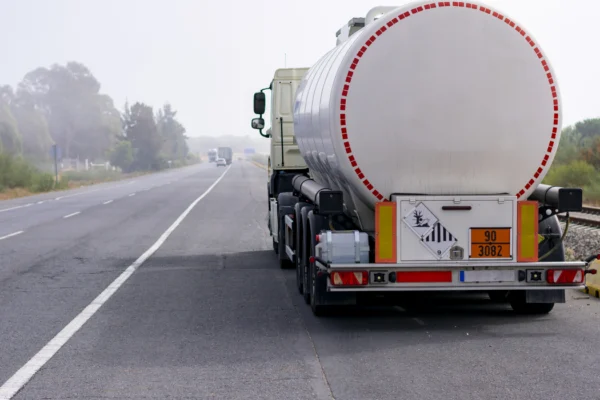
- dangerous goods;
- goods requiring special handling;
- cargo for which minimizing transfers is critical.
Whether a particular shipment is suitable for LTL should be determined individually based on its characteristics and the requirements of the route.
Consolidated Cargo from Europe to Ukraine
Consolidated cargo from Europe to Ukraine is an important logistics option for companies that purchase smaller quantities of goods from European suppliers.
Depending on the logistics model, cargo may first be delivered to a consolidation warehouse in Europe. There, shipments from different suppliers are combined into a consolidated load and prepared for transportation to Ukraine.
The process can generally look like this:
supplier → cargo pickup → consolidation warehouse → consolidated shipment → international transportation → customs procedures → delivery to recipient.
This format can be useful for regular small-volume shipments from Poland, Germany, the Czech Republic, Italy, France, and other European countries.
International transportation also requires attention to cargo documentation, customs clearance, and the requirements of the destination country.
Consolidated Cargo Transportation Within Ukraine
LTL is not limited to international routes.
Consolidated cargo transportation within Ukraine allows smaller shipments to be delivered between cities without booking a separate full-size truck.
This format can be useful for:
- supplying stores;
- warehouse deliveries;
- servicing retail locations;
- regular deliveries to customers;
- moving goods between regions.
LTL is particularly convenient for businesses with many small shipments rather than a few large ones.
What Information Is Needed to Calculate an LTL Shipment?
To receive an accurate quote, prepare the following information:
- Pickup location.
- Delivery location.
- Type of cargo.
- Total weight.
- Volume.
- Number of pallets or cargo units.
- Dimensions of any non-standard cargo units.
- Date when the cargo will be ready.
- Special transportation requirements.
- Additional services that may be needed.
For international transportation, information about the country of origin, destination country, and cargo documentation is also required.
The more accurate the information, the easier it is to determine whether LTL is suitable, what type of transport is required, and how much the delivery will cost.
When Is Consolidated Transportation the Best Option?
LTL can be the most practical choice when a business needs to ship smaller quantities without paying for an entire truck.
This format is particularly suitable when:
- the shipment does not fill the truck;
- deliveries are made regularly;
- there is no need for urgent direct transportation;
- transportation costs need to be optimized;
- the goods can be safely transported together with other shipments.
If the shipment occupies most of the truck or requires a direct route without consolidation, FTL may be a more appropriate option.
How to Choose Between LTL and FTL
The best transportation format can be determined by comparing several key factors.
Consider LTL if the shipment is relatively small, does not require the entire truck, and the main goal is to optimize transportation costs.
Consider FTL if the shipment is large, direct delivery is required, minimizing transfers is important, or there is a specific delivery deadline.
When the choice is unclear, the decision can be based on cargo weight, volume, route, product characteristics, and the required delivery time.
Conclusion
Consolidated cargo transportation is a practical solution for smaller shipments when booking an entire truck would not be cost-effective.
LTL transportation allows cargo from multiple shippers to be combined in one vehicle and makes more efficient use of available transportation capacity. This makes consolidated freight particularly relevant for small and medium-sized businesses, regular small-volume shipments, and international deliveries from Europe to Ukraine.
At the same time, when choosing LTL, it is important to consider not only the price but also delivery time, the number of logistics operations, cargo characteristics, and transportation requirements.
And if you are not sure whether your cargo should be transported in a dedicated truck or as part of a consolidated shipment, Grand Logistics Company can help determine the optimal format, calculate the cost, and organize delivery without unnecessary logistics expenses.